Aircraft Oxidation Removal: What Florida Aircraft Owners Need to Know
Aircraft Oxidation Removal in Florida | Prevention & Correction Guide
Florida's climate is one of the harshest environments for aircraft paint in the country. Between year-round UV exposure, salt-heavy coastal air, and relentless humidity, oxidation develops faster here than in almost any other region — especially on aircraft that sit outdoors or at airports near the coast.
The problem is that oxidation doesn't stay cosmetic for long. Left untreated, it eats through clear coat, degrades the paint system underneath, and drives down resale value. The good news is that it's both removable and preventable — if you know what to look for and when to act.
What Is Aircraft Oxidation and How Does It Start?
Oxidation is what happens when UV radiation and environmental exposure break down the top layer of aircraft paint over time. The clear coat loses its integrity, and the paint beneath starts to degrade.
You'll typically notice it as a dull or chalky appearance on the surface, faded color that looks washed out compared to shaded areas, loss of gloss even after washing, and a rough texture when you run your hand across the panel.
Once this process starts, it doesn't reverse on its own. Without intervention, it continues to worsen with every day of sun and moisture exposure.
Why Oxidation Happens Faster in Florida
Not all climates are equally hard on aircraft finishes. Florida stacks several environmental factors on top of each other, and the result is accelerated paint breakdown compared to aircraft based in cooler, drier regions.
UV exposure is constant. Florida receives some of the highest annual UV index readings in the continental U.S. That year-round sun breaks down clear coat significantly faster than in northern climates, especially on horizontal surfaces like wings and stabilizers that take direct overhead exposure all day.
Salt air compounds the damage. Coastal airports — and in Florida, that includes most of them — expose aircraft to airborne salt particles that settle on surfaces and accelerate corrosion. Even hangared aircraft aren't fully protected, since salt-laden air circulates through open hangars and settles on paint, fasteners, and seams.
Humidity traps moisture against surfaces. Florida's high humidity means aircraft surfaces rarely fully dry, especially overnight. That persistent moisture layer works alongside UV damage to speed up paint degradation in ways that dry climates simply don't produce.
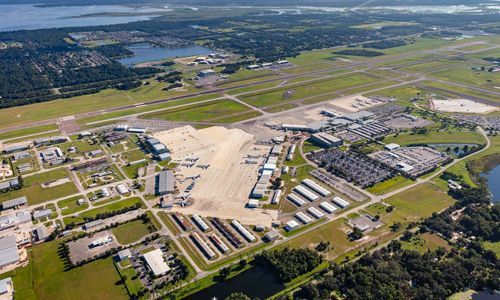
Aircraft based at airports like Jacksonville, St. Augustine, Daytona Beach, and Orlando are especially exposed to this combination of factors.
Can Aircraft Oxidation Be Removed?
Yes — but timing matters.
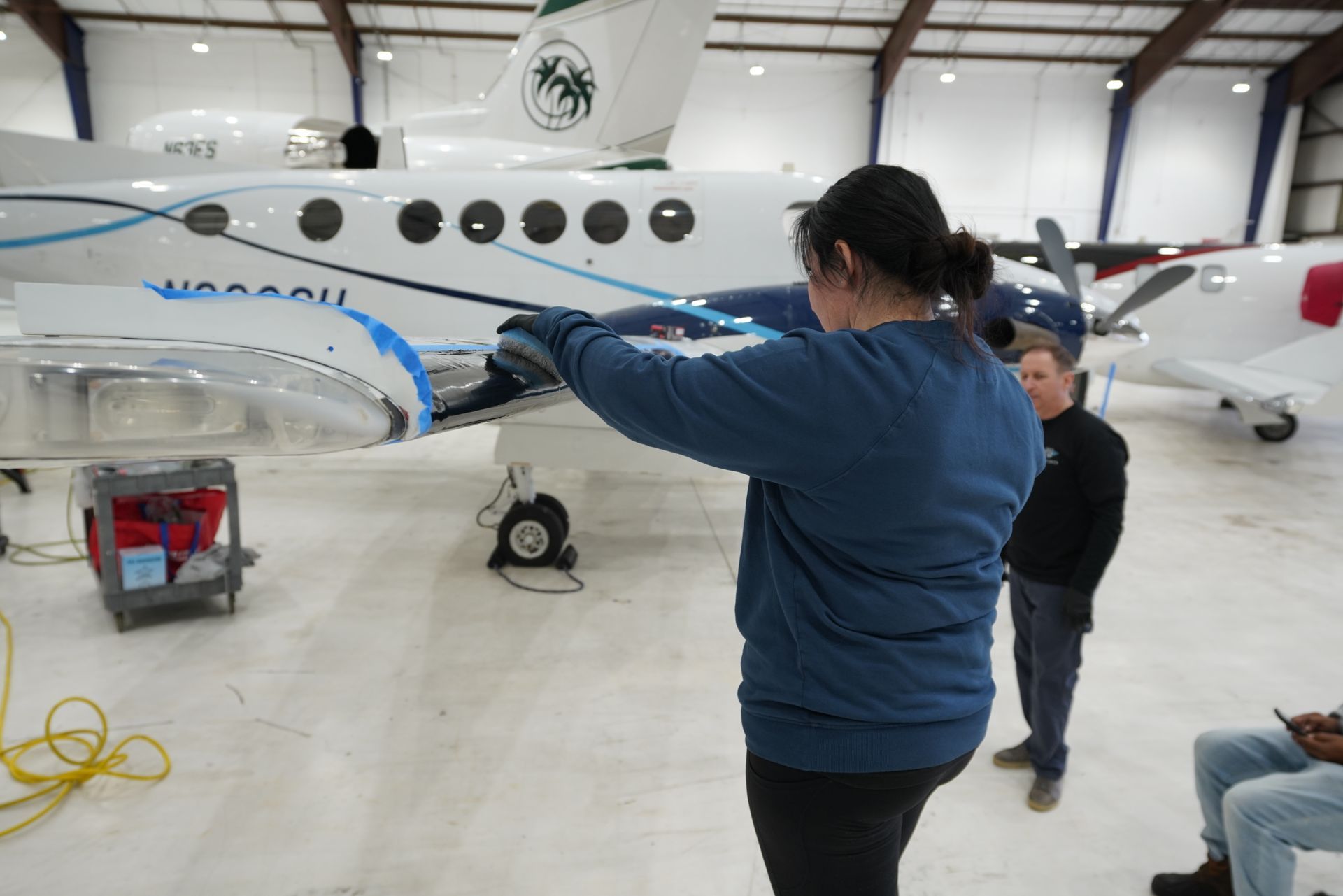
When caught early, professional paint correction can remove the oxidized layer, restore the original gloss, level out minor surface defects, and prepare the paint to accept a protective coating.
Light oxidation can often be addressed in a single-stage correction. But when oxidation has been building for months or years without treatment, it may require a multi-stage process with progressively finer compounds. At that point, the correction becomes more aggressive, more time-consuming, and more expensive.
The takeaway is simple: the sooner you address it, the less invasive the fix.
Why DIY Oxidation Removal Is Risky on Aircraft
It's tempting to grab a buffer and handle it yourself, but aircraft paint systems are fundamentally different from automotive paint. They're thinner, more sensitive to heat, and far less forgiving of technique errors.
Improper machine polishing can burn through clear coat in seconds, create visible swirl marks or uneven panels, damage paint around rivet lines and seams, and ultimately shorten the overall lifespan of the finish.
Aircraft correction requires controlled machine polishing with the right pads, compounds, and speeds — along with an understanding of how different paint systems respond. This is one area where professional experience makes a measurable difference in the result.
How to Prevent Oxidation Before It Starts
Correction works, but prevention is always cheaper. A consistent maintenance routine keeps oxidation from gaining a foothold in the first place.
Routine exterior washing is the foundation. Regular washes — ideally every four to six weeks for Florida-based aircraft — remove salt deposits, bug acids, and surface contaminants that accelerate paint breakdown. Think of it as clearing the table before damage has a chance to set in.
Ceramic coatings or protective sealants add a physical barrier between the paint and the environment. A quality ceramic coating provides UV resistance, makes surfaces easier to clean, and significantly slows the oxidation process. For aircraft in Florida, this is one of the highest-value investments you can make in exterior protection.
Scheduled maintenance detailing goes beyond a basic wash. It includes inspection of the paint condition, treatment of early-stage problem areas, and reapplication of protection as needed. Annual paint evaluations are highly recommended for any aircraft based in Florida's climate.
When to Schedule Professional Oxidation Removal
Don't wait for oxidation to become obvious from across the ramp. By that point, the damage is usually well advanced.
Schedule a professional evaluation if you notice dull or flat-looking wing surfaces, noticeable fading on top panels compared to lower surfaces, chalk-like residue that transfers when you wipe the surface, or uneven gloss levels across different sections of the aircraft.
Early intervention preserves paint thickness, maintains appearance, and avoids the cost of full multi-stage restoration down the line.
On-Site Aircraft Oxidation Removal in Florida
One of the biggest barriers to paint correction is logistics — nobody wants to reposition an aircraft just for detailing. Mobile paint correction services eliminate that problem entirely.
Professional on-site oxidation removal is available at major North and Central Florida airports, including:
- Jacksonville Executive (JAXEX)
- Northeast Florida Regional (UST)
- Gainesville Regional (GNV)
- Ocala International (OCF)
- Orlando Sanford (SFB)
- Daytona Beach (DAB)
- Orlando International (MCO)
Service is scheduled around your hangar access and FBO operations, so there's minimal disruption to your schedule.
Final Thoughts
Oxidation is one of the most common — and most preventable — forms of damage on Florida-based aircraft. The climate here guarantees that unprotected paint will deteriorate. But with the right maintenance routine and timely correction when needed, your aircraft's finish can stay protected for years.
The cost of prevention is always a fraction of the cost of restoration. Protecting your aircraft's paint today saves you from expensive correction tomorrow.
Concerned about paint oxidation?
Request a professional evaluation at your airport today.
Aircraft Detailing Insights